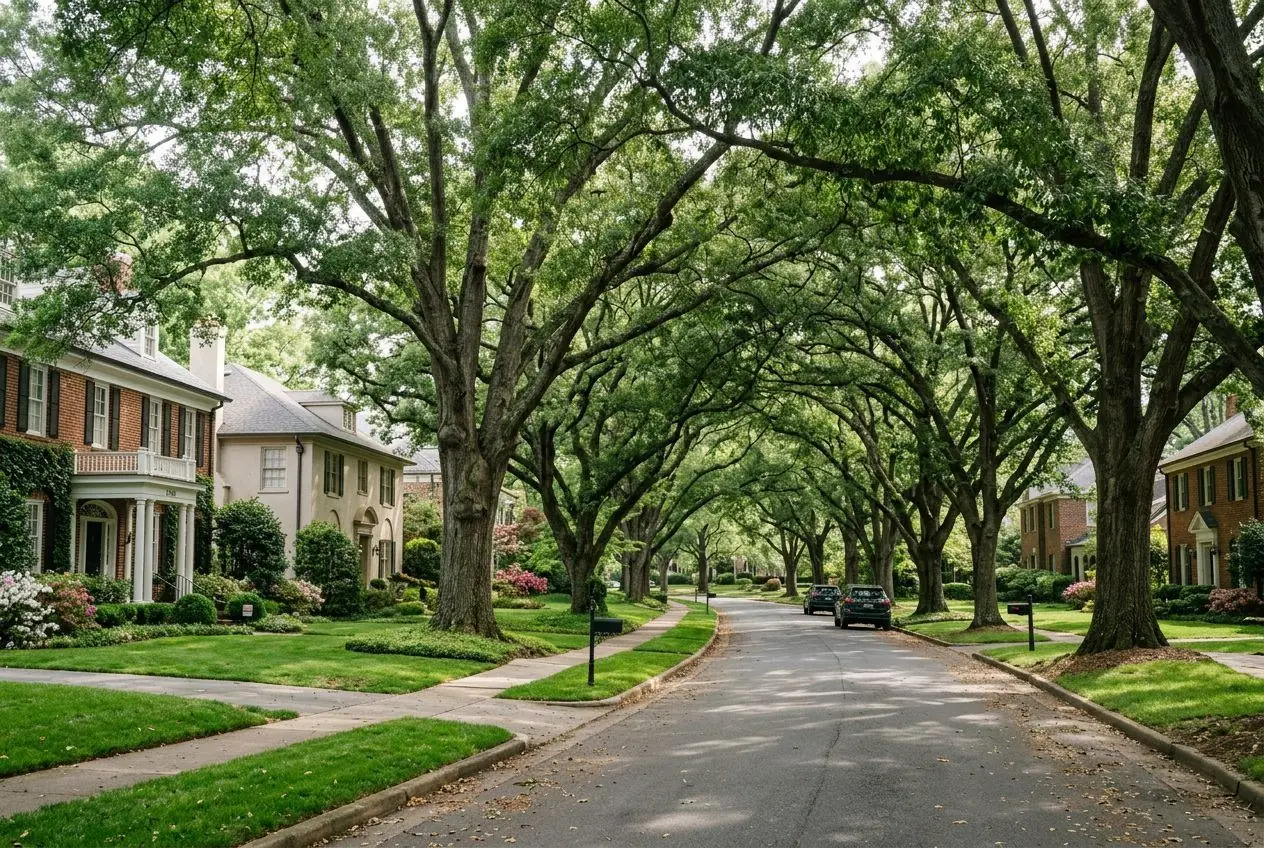
DC-to-Charlotte transplants are typically drawn by housing affordability and a less intense pace. A $700K townhouse in Arlington might buy a 4-bedroom home on a half-acre in South Charlotte. Many DC relocators work in banking or consulting, both well-represented in Charlotte. Popular landing spots include Ballantyne and Fort Mill for families, South End for young professionals, and Myers Park for those accustomed to Georgetown-style walkable neighborhoods.
Commuting patterns are the biggest adjustment for DC households. Charlotte has no Metro equivalent, so instead of choosing a neighbourhood by rail line you are choosing by which of I-77, I-485, Providence Road, or South Boulevard you are willing to sit on twice a day.
Federal and consulting résumés translate well into Charlotte's banking, energy, and professional-services base, but the hiring cycle is slower and more relationship-driven than the DC contract market. Plan on a longer search if you are moving without a role in hand.
Public-school selection works differently. Rather than jurisdiction-shopping between DC, Arlington, and Montgomery County, you are shopping CMS assignment zones plus the Union County, Fort Mill, and Cabarrus districts — and the boundaries are re-drawn more often than most transplants expect.