September 14, 2026 · Charlotte home renovation costs and ROI
September 14, 2026 brings a useful checkpoint for Charlotte homeowners: which improvements deserve money before winter, and which should wait for a better-defined scope? A worn kitchen in Madison Park, an aging bathroom in Dilworth, and a cramped ranch in Cotswold present different investment decisions. The right budget depends on the house’s condition, the surrounding resale market, and how long the owner expects to stay.
Renovation cost and resale value are not interchangeable. A project can improve daily life without returning its full expense at closing. These planning ranges are not a contractor bid survey or a prediction of appraisal value; use them to screen ideas, then obtain written, property-specific proposals.
What Charlotte Renovation Budgets Should Include
For an existing Charlotte home, separate cosmetic work from construction that opens walls or changes the footprint. Painting cabinets is not equivalent to replacing cabinets, rewiring a kitchen, and moving a sink. The ranges below assume professional installation and broadly midrange selections, not owner-supplied labor or bespoke luxury finishes.
| Project and scope | Planning range | Major budget driver |
|---|---|---|
| Kitchen refresh, keeping serviceable cabinets and layout | $15,000–$30,000 | Countertops, refinishing, appliances |
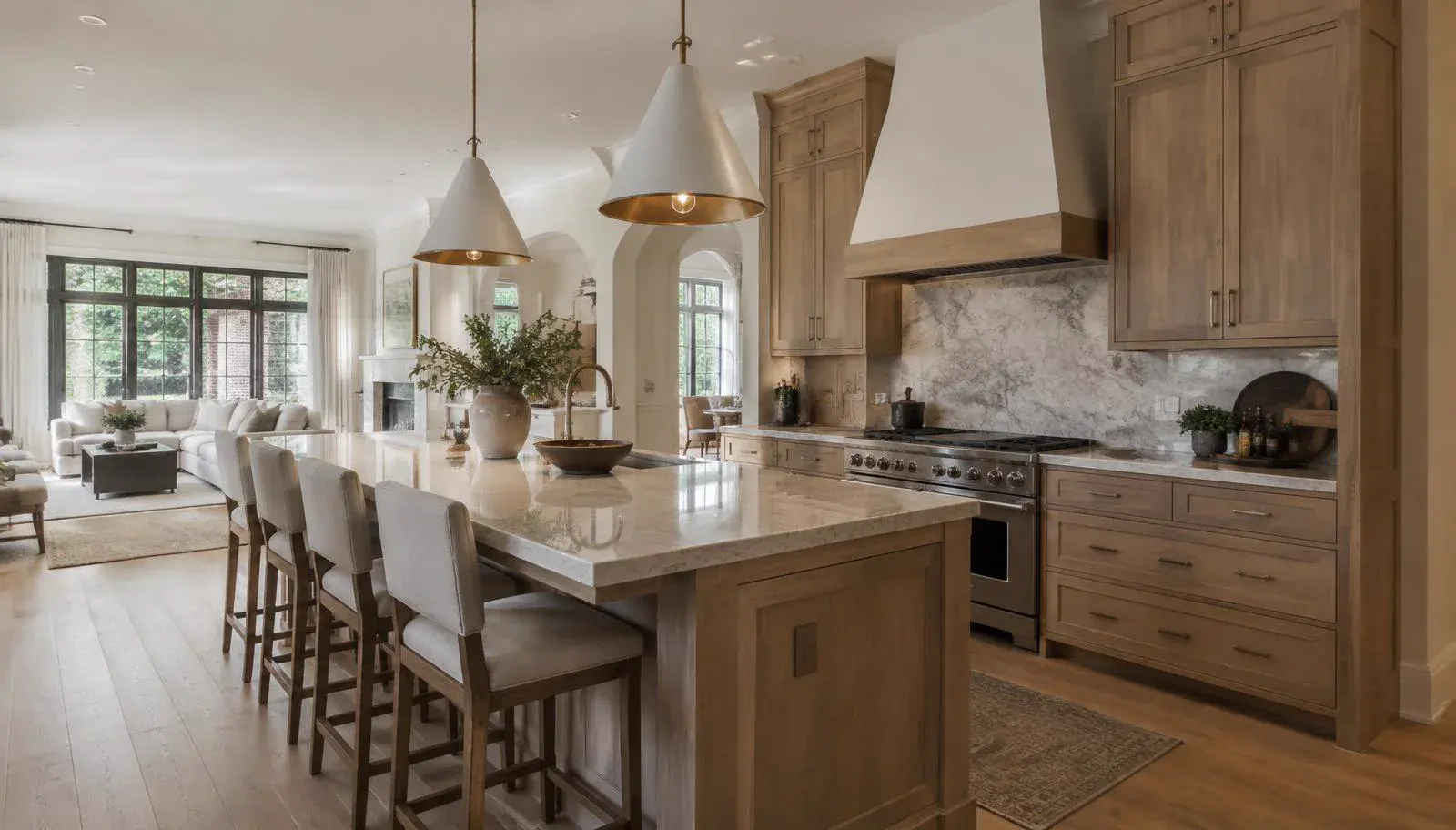
| Full kitchen remodel, roughly 150–200 square feet | $40,000–$85,000 | Cabinetry, trade work, layout changes |
| Hall bathroom, roughly 40–60 square feet | $15,000–$30,000 | Waterproofing, tile, plumbing repairs |
| Primary bathroom, roughly 90–140 square feet | $30,000–$65,000 | Shower construction, fixtures, custom storage |
| Conditioned addition, roughly 300–600 square feet | $250–$450 per square foot | Foundation, roof connection, utility capacity |
Treat these as construction allowances. Confirm whether each proposal includes demolition, debris removal, permits, appliances, finish materials, and sales tax. Design services, engineering, surveys, temporary housing, and substantial concealed damage may require separate allowances. Our Charlotte renovation cost guides provide a starting point for defining comparable scopes.
Carry a contingency of roughly 10%–15% for a well-understood project and consider 15%–20% when opening walls in an older, poorly documented house. That reserve should cover uncertainty, not upgrades already on the wish list. A $55,000 kitchen with a 15% contingency needs $63,250 before any separately priced design or living expenses.
Use Square-Foot Math Without Letting It Mislead You
A 180-square-foot kitchen priced at $60,000 works out to about $333 per square foot. A 50-square-foot bathroom at $22,000 is $440 per square foot. The bathroom is not necessarily overpriced: waterproofing, a toilet, a vanity, and a shower concentrate expensive work inside a small space. Cost per square foot is a cross-check, not a substitute for a scope.
Additions make the math more consequential. A 400-square-foot family-room addition at $325 per square foot produces a $130,000 construction allowance. Adding a 15% contingency brings that to $149,500, before separately quoted design, engineering, or site work. A bathroom, difficult foundation access, or a complicated roof intersection could move the project well above that starting point.
Compare that expansion with reworking existing space. Removing a non-load-bearing partition and replacing flooring may solve circulation problems without adding a foundation or roof. A structural opening is different: engineering, a beam, temporary support, and utility relocation can erase much of the apparent savings. Use a line-item cost breakdown to identify what each alternative actually buys.
Buyers should also distinguish cosmetic discounts from deferred-maintenance discounts. A dated countertop is easy to price. Crawl-space moisture, deteriorated framing, and an electrical system needing substantial work deserve specialist evaluation before the renovation allowance becomes part of an offer strategy.
Match ROI to the House and the Neighborhood
In Dilworth or Elizabeth, preserving original trim and a coherent floor plan may matter more than installing the largest possible island. Properties within a local historic district can also require exterior-design review; verify the address’s status before planning window changes or an addition. Character-sensitive repairs may be the better investment than removing details buyers expect.
For a ranch in Madison Park, Starmount, or Cotswold, an awkward laundry arrangement or a missing second bathroom may be a more meaningful limitation than dated finishes. But neighborhood names alone do not establish a spending ceiling. Lot position, road noise, school assignments, condition, and finished living area can create substantial differences within a few blocks.
In SouthPark-area luxury pockets or established Ballantyne subdivisions, buyers may expect coordinated finishes and functional primary suites. That does not mean every premium appliance or imported slab earns a premium at resale. Review nearby closed sales with similar size, age, and location; our Charlotte neighborhood guides can help organize that research, but cannot replace property-level comparisons.
Calculate resale recovery separately from enjoyment. If a $60,000 renovation contributes an estimated $36,000 to sale value, cost recovery is 60%, and the unrecovered renovation expense is $24,000. That is an illustration, not a Charlotte market forecast. Financing interest, maintenance, and selling expenses can further reduce the financial benefit.
Owners selling within two years should usually investigate repair, paint, lighting, and selective replacements before commissioning a full redesign. Owners staying ten years can reasonably prioritize accessibility, storage, or cooking performance, while recognizing those benefits as personal value rather than guaranteed equity.
Plan Fall Work Around Approvals and Exposure
Mid-September is a sensible time to inspect drainage, roof penetrations, and exterior openings before committing to interior finishes. Charlotte can still experience heavy tropical-system rainfall in early fall. Fix the water pathway before installing new drywall or flooring, and require a weather-protection plan for work that opens the building envelope.
Do not equate a contractor’s construction duration with the full project calendar. Design decisions, engineering, permit review, historic-district review where applicable, and material availability come before or overlap fieldwork. A kitchen promised as a six-week installation may still require months of preparation. Thanksgiving completion should not depend on cabinets or specialty fixtures that lack confirmed delivery dates.
Request proposals with identical assumptions and a payment schedule tied to defined milestones. Identify who handles permits and inspections, what triggers a change order, and whether the household can safely occupy the home during construction. If expansion requires major structural reconstruction, compare the alternatives using a build-versus-renovate analysis before paying for detailed plans.
Frequently Asked Questions
How much should a Charlotte kitchen remodel cost?
Allow roughly $40,000–$85,000 for a full, professionally installed midrange kitchen remodel. Keeping the layout and refurbishing sound cabinets can reduce spending; structural changes and custom cabinetry can exceed that range.
Which renovation delivers the best ROI?
No project wins everywhere. Correcting a visible defect or functional weakness often makes more sense than adding luxury finishes. Compare the proposed scope with what similar nearby homes actually offer.
Does every renovation need a permit?
No. Cosmetic work differs from structural, electrical, plumbing, or mechanical changes. Confirm requirements with the applicable permitting authority before work begins, including separate zoning or historic-review requirements where relevant.
Should buyers renovate before moving in?
Often, if work involves floor refinishing, demolition, or the only bathroom. Balance the cost of overlapping housing against disruption, storage, and the potential inefficiency of working around an occupied home.
All figures are estimates and change with market conditions, property conditions, project scope, and contractor availability.
Keep reading: Charlotte build cost guides, renovation cost guides, or the neighborhood library.