October 5, 2026 · Charlotte interior design trends
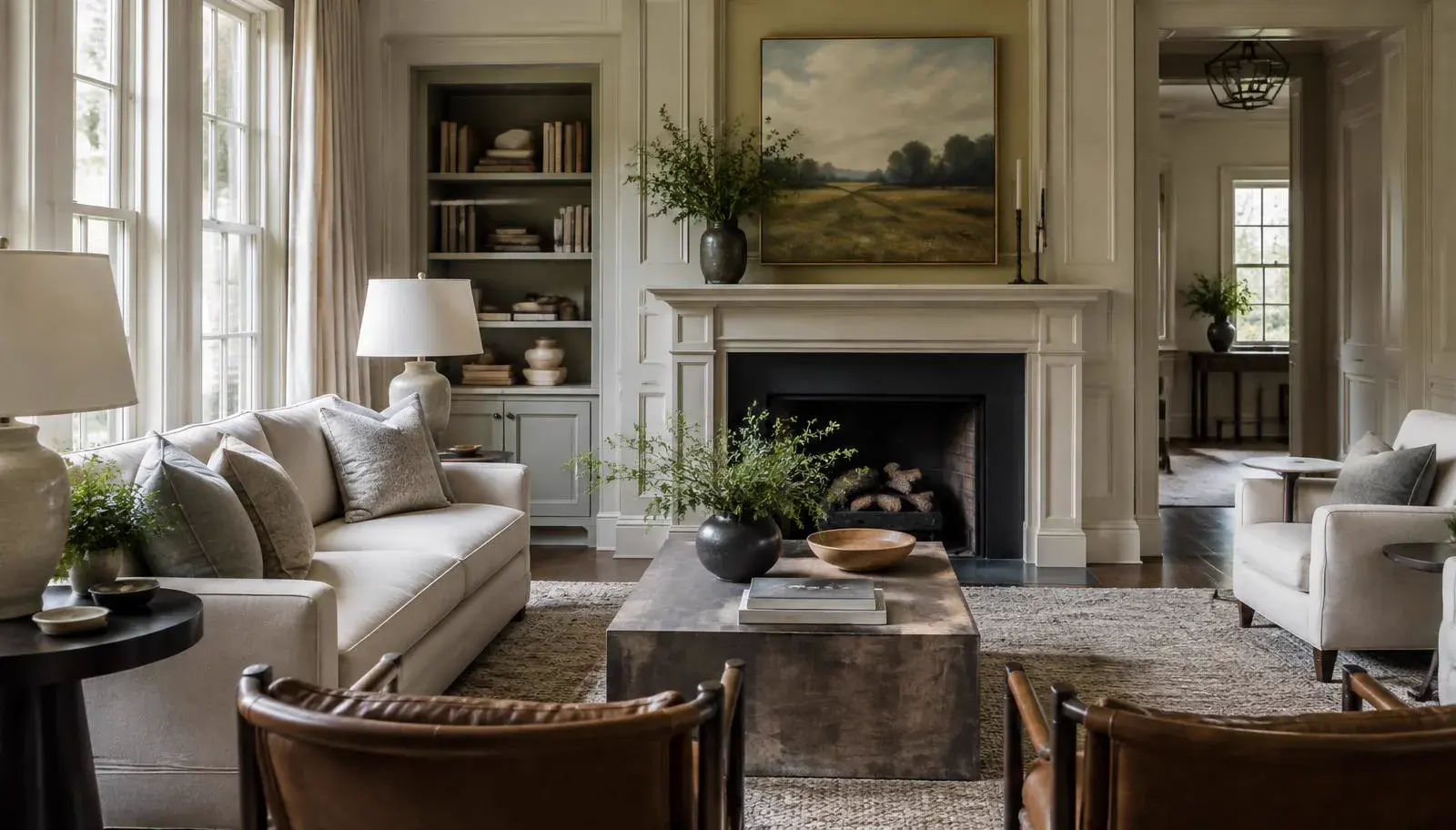
Warm whites, natural wood, softer lighting, and fewer competing finishes offer a useful direction for Charlotte interiors this fall. Often called warm minimalism, the approach is less about empty rooms than about reducing visual noise while keeping spaces comfortable. For homeowners considering this look in October 2026, the practical question is not how to replace everything. It is which changes will make existing rooms feel more coherent.
Warm minimalism in Charlotte works best when it respects the house. A brick Colonial in SouthPark, a Dilworth bungalow, and an Uptown condominium need different solutions. Before choosing finishes, separate cosmetic dissatisfaction from functional problems: yellowed paint is not a reason to replace sound cabinets, while inadequate kitchen lighting will not improve with a fashionable backsplash.
1. Choose a Warmer Palette Without Fighting the House
The useful design shift is toward layered neutrals rather than a single beige applied everywhere. Creamy walls, muted olive textiles, brown-black metal, and oak or walnut accents can soften interiors without making them dark. However, warm does not automatically mean yellow. Paint that looks balanced beside red brick can turn muddy against cool gray tile.
Test large sample boards beside fixed materials, including countertops, flooring, and fireplace surrounds. Move them between rooms and check them in morning daylight and after sunset. In homes with deep porches or mature tree cover, familiar features in parts of Dilworth and Myers Park, daylight may be more limited than listing photography suggests. A slightly lighter wall color can preserve the warmer effect without flattening the room.
Keep trim decisions deliberate. Painting walls and trim the same color can simplify a room, but using different sheens helps doors and baseboards remain washable. Preserve distinctive woodwork when it contributes to the architecture. The Charlotte neighborhood guides provide context for buyers comparing areas, but the individual home's materials should lead the finish choices.
2. Budget by Surface, Not by Inspiration Photo
The following are broad Charlotte planning allowances, not verified contractor quotes. They assume ordinary access and midrange materials; repairs, premium selections, and difficult installation conditions can move costs outside these ranges. Request written scopes before comparing bids.
| Update | Planning allowance | Scope to verify |
|---|---|---|
| Paint a 400-square-foot living room | $1,200–$2,800 | Walls, minor preparation, two coats; trim and ceilings extra |
| Refinish existing wood floors | $4–$8 per square foot | Sanding and finish; repairs and moving furniture extra |
| Install engineered wood | $10–$18 per square foot | Material and installation; demolition and leveling extra |
| Add four recessed lights | $800–$1,800 | Fixtures and wiring with accessible ceiling space; patching extra |
| Add one modest built-in wall | $4,000–$9,000 | Paint-grade cabinetry; confirm dimensions and finish |
Square-foot math makes the flooring decision clearer. Refinishing 800 square feet at $4–$8 per square foot produces a $3,200–$6,400 allowance. Replacing the same area with engineered wood at $10–$18 produces $8,000–$14,400 before excluded work. With a 15% contingency, those figures become approximately $3,680–$7,360 and $9,200–$16,560. Contingency is not a substitute for pricing known demolition or subfloor repairs separately.
Painting uses different math. A 20-by-20-foot room has 400 square feet of floor area, but its 80-foot perimeter multiplied by nine-foot ceilings creates 720 square feet of gross wall area before subtracting openings. Doors, trim, preparation, and ceiling height affect labor. Use the Charlotte renovation cost guides to frame the project, then request a room-by-room scope.
3. Spend on Texture and Lighting Before Decorative Construction
Natural-looking texture can come from washable curtains, a wool-blend rug, or wood furniture rather than expensive permanent finishes. Limewash and plaster-style walls create depth, but touch-ups may remain visible, and results depend heavily on preparation and applicator skill. In a busy hallway, conventional washable paint may be the more forgiving choice.
Lighting deserves attention before a feature wall. Aim for compatible color temperatures across adjoining spaces: roughly 2700K creates a warmer atmosphere, while 3000K can suit kitchens where a slightly crisper appearance is preferred. Look for a color rendering index of 90 or higher when accurate wood, textile, and paint colors matter. Test one fixture or bulb before committing throughout the house.
In open-plan homes in Ballantyne or Steele Creek, repeated lighting finishes can connect the kitchen, dining area, and living room without making every fixture identical. Aged brass and dark bronze can coexist when one is dominant. Before adding controls, check dimmer compatibility and neutral-wire requirements; the smart home cost guides can help distinguish straightforward lighting controls from broader automation projects.
Built-ins are worth considering when they solve a specific storage problem. They are less compelling when added solely to display objects. Measure books, media equipment, and concealed storage needs first. In a smaller NoDa home or condominium, a movable cabinet may preserve layout flexibility at a lower cost.
4. Match the Scope to Fall Timing and Ownership Plans
With October underway, work backward from any holiday hosting deadline. Painting and fixture swaps generally involve fewer dependencies than custom cabinetry or floor replacement, but availability must be confirmed. Reserve time for samples, delivery checks, preparation, and corrections. Avoid scheduling furniture delivery immediately after floor finishing; follow the finish manufacturer's cure and rug-placement instructions.
Charlotte's seasonal humidity changes also matter for wood products. Follow flooring requirements for indoor temperature, humidity, and acclimation rather than relying on a fixed number of days. In older houses, coatings or materials that may contain lead or asbestos warrant appropriate assessment before disturbance. Condo owners should check work hours, elevator reservations, and acoustic-underlayment rules before ordering flooring.
Buyers expecting to stay only a few years may prefer paint, lighting, and movable furnishings over strongly personalized millwork. Longer-term owners can justify storage tailored to daily routines without assuming dollar-for-dollar resale recovery. If the design wish list includes moving walls or plumbing, consult the build vs. renovate analysis before treating it as a cosmetic refresh.
Frequently Asked Questions
Can warm minimalism work with gray floors?
Yes. Try balanced off-whites, muted greens, and medium-tone wood rather than strongly yellow creams. Sample everything against the flooring; replacing serviceable floors is not essential to achieving a warmer room.
What should a $5,000 refresh prioritize?
Start with one main room. An illustrative allocation is $1,800 for painting, $1,000 for lighting, $1,500 for a rug or curtains, and $700 for contingency. Adjust after obtaining scoped quotes.
Should every wood finish match?
No. Two or three intentional wood tones can add depth. Repeat each tone somewhere in the room and compare undertones, especially when pairing reddish existing floors with new oak furniture.
Is this look practical for families and pets?
It can be when simplicity includes concealed storage, cleanable upholstery, and durable finishes. Pale, delicate textiles are optional; midtone fabrics and patterned rugs can offer warmth with more forgiving everyday maintenance.
All figures are estimates and change with market conditions, material selections, project scope, and contractor availability.
Keep reading: Charlotte build cost guides, renovation cost guides, or the neighborhood library.